

By Rolando A. Flores Galarza
NMSU College of Agricultural, Consumer and Environmental Sciences
As dean of New Mexico State University’s College of Agricultural, Consumer and Environmental Sciences, I have witnessed how education transforms lives and entire communities. Nowhere is this more evident than in the field of agriculture. In New Mexico, where agriculture is so closely tied to our economy and cultural identity, investing in agricultural education is essential.
The producers who grow our signature crops, like chile and pecans, or raise livestock on our diverse lands face mounting challenges, including persistent drought, water scarcity, soil degradation, and economic hardships caused by changing global markets. Addressing these issues will require decisive action and innovation, fueled by science-based knowledge, new technologies, and forward-thinking practices.
This is where agricultural education plays a critical role. We must equip our farmers, ranchers, scientists, and policymakers with the tools they will need to advance and sustain our agricultural systems for generations to come. At NMSU, the College of ACES is leading the way in creating a more resilient agricultural sector through education, research, and extension.
Across our college, students are studying sustainable crop and livestock management, developing water-conservation strategies, using climate-smart technology, and learning to become critical thinkers. They are supported by world-class faculty, who champion success from the moment a student walks into the classroom until they complete their degree and enter the workforce. Our graduates leave NMSU ready to serve as leaders who will ensure that agriculture not only survives but thrives in New Mexico and beyond. They run family operations, start new agribusinesses, work for the government, or join leading companies that support economies through innovation and entrepreneurship.
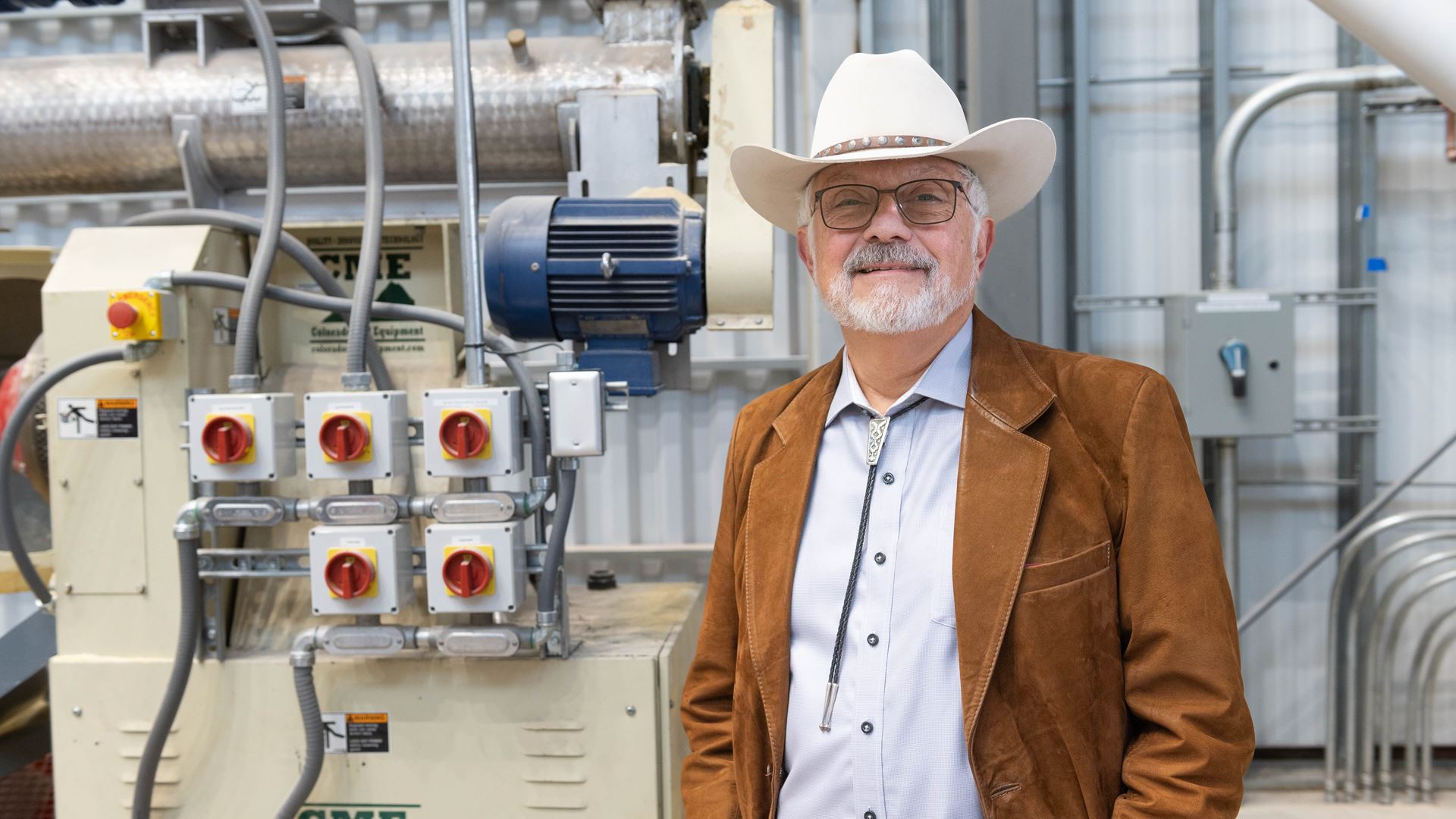
Recent investments in the College of ACES have enhanced the way we teach and serve New Mexico. With support from general obligation bonds approved by voters in 2018 and 2020, we opened two cutting-edge facilities – the Food Science, Security and Safety Center and the Animal Nutrition and Feed Mill – in 2023. Both houses have state-of-the-art technology and laboratories that have helped elevate our research efforts in value-added agriculture, food processing, dairy science, and other important areas.
We also recently opened a new Student Learning Center, another modern facility with an arena that enables us to teach with animals in new and exciting ways, adding significant value to our academic programs. Together, these investments strengthen NMSU’s competitiveness among our peer land-grant institutions and greatly enhance student experiences. These facilities have been instrumental in increasing the department of Animal and Range Sciences from 320 to 550 students over the last 7 years.
Research is central and critical to our mission to serve New Mexico. Nowhere is that better exemplified than in the work of the Agricultural Experiment Station and the Center of Excellence in Sustainable Food and Agricultural Systems. Created in 2019, CESFAS has emerged as a key driver of innovation and economic development in the state’s agricultural sector. New laboratory facilities at CESFAS provide food safety, water, and soil testing services. AES- and CESFAS-supported activities have generated more than $49 million in competitive research proposals and secured more than $7 million in external funding. New developments in digital agriculture, artificial intelligence, and drone applications are changing the face of agricultural instruction, and with them, the incorporation of new technologies on ranches, farms, and processing facilities.
Moreover, our research expenditures in fiscal year 2025 were associated with direct employment impacts of more than 500 jobs, labor income of more than $37 million, and value-added (contribution to state gross domestic product) of more than $45 million. When factoring in upstream impacts, our research expenditures supported more than 647 jobs, $45 million in labor income, and $61 million in contributions to the state’s GDP.
As we appreciate and value the consistent financial support of New Mexico taxpayers through the legislature, continued investment will allow us to expand our impact, ensuring that knowledge from our experts reaches the fields, ranches, and communities that need it most. With strategic investment in agricultural education, New Mexico can continue leading in innovation, resilience, and sustainability. At NMSU’s College of Agricultural, Consumer, and Environmental Sciences, we stand ready to lead this effort, but we cannot do it alone. It will require the commitment of policymakers, industry partners, and communities across the state. Investing in education will ensure a stronger and healthier New Mexico.
I invite our southern New Mexico community to learn more about the College of ACES and our unique role in the state during our free ACES Open House event from 9 a.m. to noon on Saturday, April 25. You can pick up a self-guided exploration map at the welcome tent outside Gerald Thomas Hall, 940 College Drive.
Rolando A. Flores Galarza is dean of New Mexico State University’s College of Agricultural, Consumer and Environmental Sciences. He may be reached at acesdean@nmsu.edu.