
Industry professionals today are concerned that universities are scaling back geology field-camp experiences, long considered a core rite of passage for the geology undergraduate degree. A variety of pressures are to blame: Shrinking student enrollment, a shortage of field-trained faculty, surging costs of travel and insurance, tighter institutional budgets and a shift toward modern digital tools.
New Mexico State University is finding success bucking that trend.
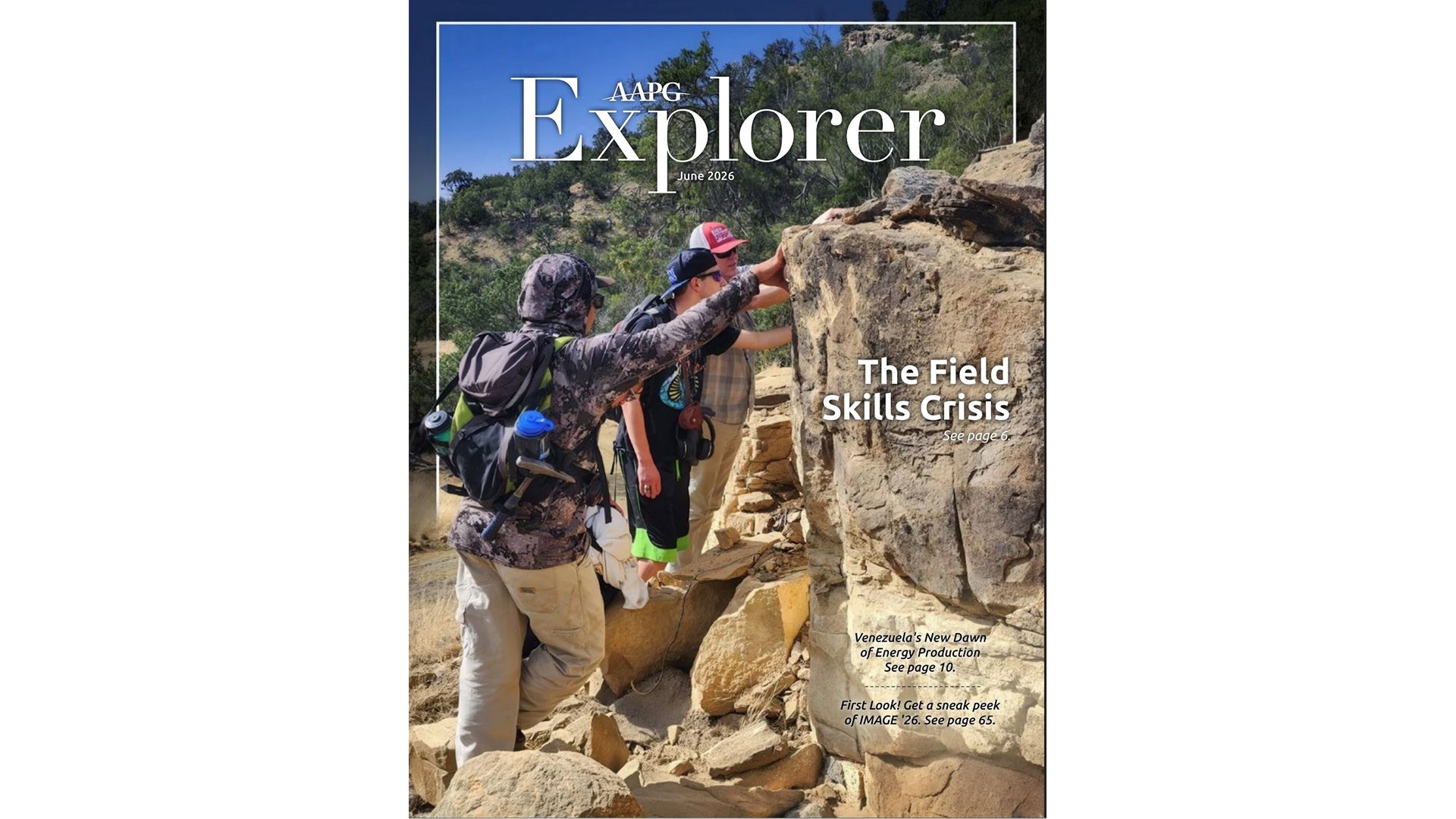
The Geological Sciences Department at NMSU offers a capstone field camp course that was the cover story of a recent edition of the AAPG Explorer, the flagship magazine published by the American Association of Petroleum Geologists (AAPG). NMSU’s partnership with A-Lan Reynolds, the founder of the Reynolds Field Station (RFS) is putting the university at the forefront of a project to reignite the field camp course philosophy and put students who want that experience together with universities that offer it, creating a pipeline to employers.
“A huge amount of the revenues for the state of New Mexico come from industries that are based in geoscience, whether it's mining, petroleum, environmental and even water resources,” Reynolds said. “To understand it, you have to get out in the field.”
With access to 320 acres of untouched nature in the mountains of west-central New Mexico and rocks dating back to the age of the dinosaurs, NMSU’s two-year partnership with Reynolds, provides the infrastructure that supports geology students in gaining needed field skills as they train to enter the workforce in resource exploration, resource management, environmental and geohazard identification and remediation, and research.
NMSU is doing field-based research on tectonics, sedimentology, stratigraphy and paleobiology using a wealth of new datasets from very diverse samples at RFS. In addition to research, NMSU’s Department of Geological Sciences offers opportunities for both undergraduate and graduate students to gain special field experiences at the Reynolds Field Station. Other institutions and state agencies also are conducting research at RFS. Over the summer, representatives of the Perot Museum of Nature and Science in Dallas showed two NMSU undergraduate students how to carefully jacket fossil bones to send to the museum. Drew Peltier, a tree physiologist from the University of Nevada, Las Vegas, invited NMSU 2025 field camp students to experience taking tree cores, as he conducted his studies on the drought resilience of modern trees at the field station.
“These field school courses are oftentimes a senior capstone course. Students even might take it after they walk at graduation. It’s that important,” said Brian Hampton, associate geology professor. “In terms of employers, this is the sort of thing that they're really looking for, and I think we've taken for granted that this is something that's sustainable. Over the course of the last five or 10 years, we're seeing something that we thought was automatic running in the background. Now, it really needs a little bit of help, and A-Lan has been very supportive in helping NMSU geological sciences achieve its goals on this front.”
Reynolds, who has master’s degrees in geophysics from Stanford University and electrical engineering from the University of Texas at Austin, founded the Reynolds Field Station to address the need but soon joined the American Association of Petroleum Geologists Trustee Associates to do more.
“I really wanted to make a difference, and I wanted to invite industries that use geologists and geoscientists to also become engaged,” Reynolds said. “At the meeting, they suggested that I coordinate with a couple of the other trustee associates and gather a national group of industry and foundation leaders to try to address this problem. It's called ‘Friends of Field Camps,’ and it’s only been in existence for a year and a half, but it has just exploded.”
Last year, Friends of Field Camps conducted two studies. One was of a survey of faculty teaching field camps because the decline in field education is a nationwide problem. The second survey went to a large group of employers across a many industries asking what skills they are looking for in hiring and what skills differentiate those they choose to offer a job.
“In every single case, field education experience came to the top of the list for employers,” Reynolds said. “It’s really important. Other skills such as learning to write reports, being very disciplined about gathering data in the field were also important, particularly for those in the mining industry. They don't want employees coming back from the field with samples, but no good documentary evidence.”
The Friends of Field Camps now has 18 professional societies, foundations, industry foundations, federal and state governments coming together behind this effort.
“We are spread across mining, petroleum explorations and energy development.” Reynolds said. “We meet regularly, and our goal is to put students together with field school opportunities. We’re in the process of creating a website, and we're going to start with a pilot group of about 15 and NMSU is part of that.”
A major obstacle for students for these field camp courses is financial as well as the summertime commitment. Field camp takes anywhere from three to six weeks of a student's summer, which that cuts into their ability to make money and have a part-time job or full-time job. It also includes full credits so students also may pay $2,000 for course credits and another $4,000 to $6,000 in fees at some schools. Hampton said NMSU is among the more competitive and most affordable field camps in the U.S. right now. Many of the institutions that are part of Friends of Field Camps are helping by providing scholarships.
“Employers tell us, ‘We want your students getting experience in field work,’” Hampton said. “It doesn't matter if you're in environmental geology, petroleum geology, hydrology, you have to get hands-on field time in the earth systems and see it, that’s how you learn it. What we do at the NMSU Field Camp is an immersive experience. It's huge for our students’ career development and really puts them at the front of the line in terms of getting future employment.”
Hampton mentioned NMSU alumnus and geology grad student Leo Kuhl, who was recently hired by ExxonMobil after graduating in 2025. His master’s thesis depended on gathering key data sets of sedimentary deposits at the Reynolds Field Station, which revealed new key insights from rocks from the Mesozoic and Cretaceous period.
“Over the summer, a number of students got to work directly on research projects with a group of NMSU faculty and other professional scientists who are putting their data together to try to solve a very big science question about the paleoclimate and the source of the rocks and to answer detailed questions about the evolution of what we see out there in 3D,” Reynolds said. “That is unique and it's an outstanding experience. With Friends of Field Camps, we want to help students acquire this experience, which will also improve their job opportunities.”
-30-
CUTLINE: Cover of the AAPG Explorer, the flagship magazine published by the American Association of Petroleum Geologists (AAPG) (Courtesy image)
CUTLINE: NMSU undergraduate students mapping and collecting samples in the Sawtooth Mountains just northwest of Datil, New Mexico. From left: Antonio Trujillo, Xtopher Trujillo, A.J. Guillen and Brian Hampton, NMSU Geological Sciences professor. (Photo by A-Lan Reynolds)
CUTLINE: NMSU Graduate students Leo Kuhl and Nicole Salladin taking a break from mapping in 2025 at the Reynolds Field Station. (Photo by A-Lan Reynolds)
CUTLINE: From left to right: NMSU geology professor Andrew Flynn, Rachel Laker, Hanover College professor; and Lilly Daniels and Ariam Deleon, NMSU graduate students. (Photo by A-Lan Reynolds)
CUTLINE: A-Lan Reynolds (in the pink hat) joins students carefully jacketing a fossil bone to send back to the Perot Museum of Nature and Science in Dallas. From left to right: Reynolds, Lilly Daniels, NMSU graduate student; Dori Contreras, Perot Museum; Ariam Deleon, NMSU graduate student; and Pam Riddle, Perot Museum. (Photo courtesy A-Lan Reynolds)