

Mosquitoes do more than inflict an itchy bite – through the transmission of diseases, they are the world’s deadliest animal to humans. Researchers working to control the population of these invasive species need access to a steady supply of food for their lab specimens, and a new meal formula created by New Mexico State University researchers will provide them with just that.
In 2015, biology professor Immo Hansen began working with Ph.D. student Kristina Gonzalez on a meal recipe that worked well for the Aedes aegypti mosquito, which transmits yellow fever, zika and dengue. They named their recipe “SkitoSnack.” Since then, Gonzalez has earned her Ph.D. in biology from NMSU and Anjali Karki, a current biology Ph.D. student, joined the SkitoSnack project.
Now, they’re bringing the Anopheles stephensi mosquito to the table – one of the species responsible for transmitting malaria. Karki has successfully developed an updated recipe that is not only well-suited to support both Aedes aegypti and Anopheles stephensi mosquitoes, but one that the insects prefer over their normal diet. They named this recipe “SkitoSnack 2.0.”
“This is really personal to me because diseases like dengue and malaria are a nightmare for people back home,” said Karki, who is an international student from Nepal. “This is going to have a bigger impact globally. It’s a new hope for endemic regions that suffer from these mosquito-borne illnesses.”
While it might seem counterintuitive to raise large groups of these insects, it’s a necessary step in irradicating them from the wild. Mosquitoes are becoming more tolerant to current repellant methods, leading researchers to investigate more long-term solutions. One example is the sterile insect technique.
“When you have a pest insect somewhere, the first thing people do is spray insecticides,” said Hansen. “However, these insects develop resistance and become harder to kill. With the sterile insect technique, you breed a lot of these insects, sterilize the males and then release them into the wild.”
Once these sterile male mosquitoes are released, they mate with female mosquitoes in the wild, who then lay eggs that never hatch. This leads to a decline in the insect’s population in the region. However, for this process to work, researchers need to be able to rear a large population of mosquitos in the lab before they’re sterilized and released.
This operation requires a lot of fresh blood for the mosquitos to eat. Access to a steady supply of high-quality blood in the quantity necessary to maintain the lab population is a challenge for researchers, since bovine blood from slaughterhouses can contain contaminants that are poisonous to mosquitoes.
With SkitoSnack 2.0, researchers will be able to provide their lab specimens with a reliable and consistent blood-meal alternative, helping to grow the populations necessary for irradicating these deadly insects.
Karki’s paper “SkitoSnack 2.0 - A Bloodmeal Alternative for Anopheles and Aedes Mosquitoes” is available here.
-30-
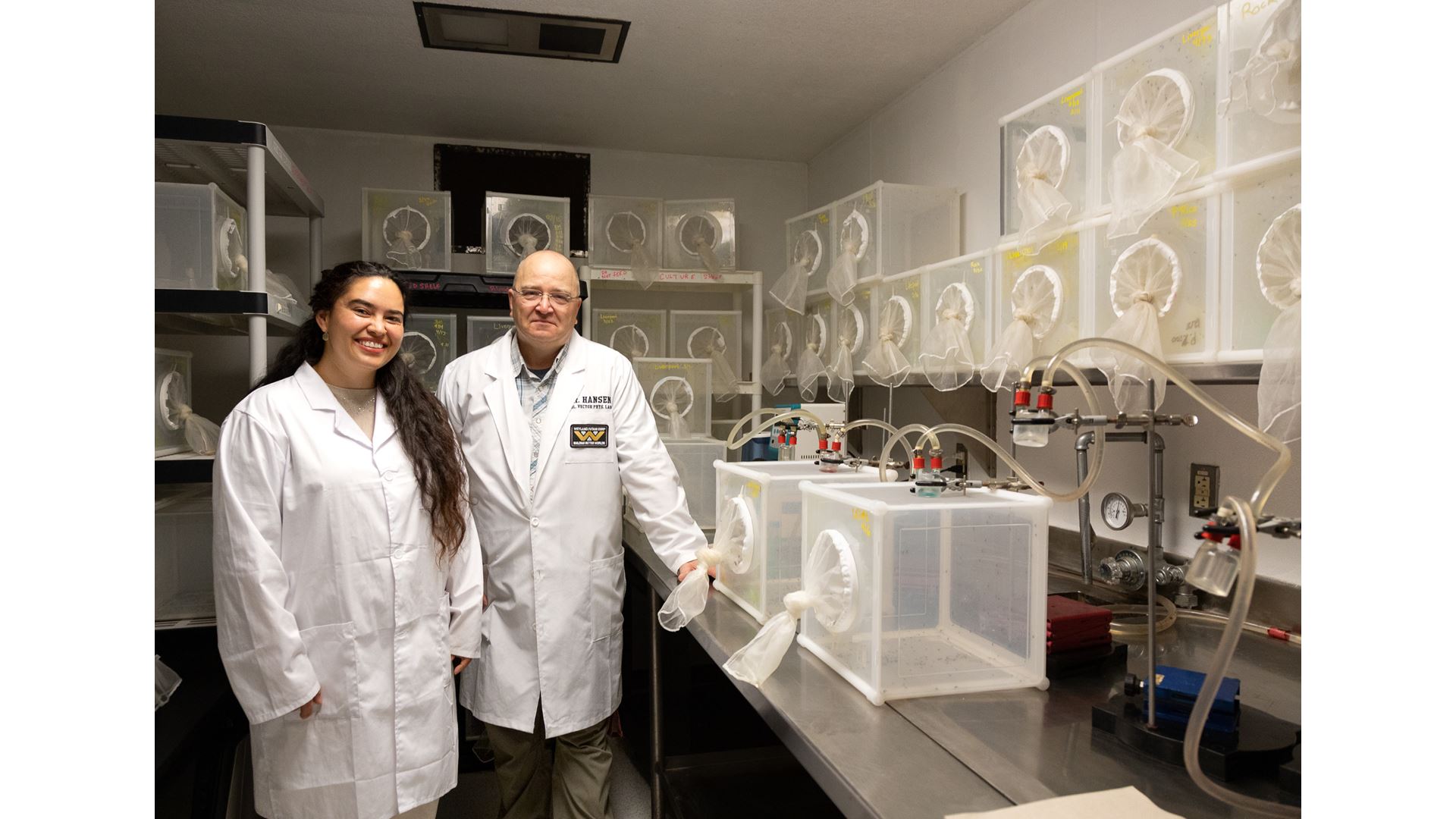
CUTLINE: Immo Hansen, biology professor at New Mexico State University, and Anjali Karki, biology Ph.D. student, have updated the “SkitoSnack” recipe to successfully support Anopheles and Aedes mosquitoes. These insects transmit deadly diseases like malaria, yellow fever and dengue. The new formula will help rear large populations of these mosquitoes so they can be sterilized and released, helping to irradicate them from the wild. (NMSU photo by Sarah Kimmerly)
CUTLINE: The “SkitoSnack 2.0” recipe developed by researchers at New Mexico State University, the blue substance seen here, is a reliable and consistent meal alternative for mosquito species that transmit deadly diseases like malaria, yellow fever and dengue. This updated recipe helps researchers rear large populations of these insects so they can be sterilized and released into the wild, providing relief for regions where these diseases are endemic. (NMSU photo by Sarah Kimmerly)
CUTLINE: Anjali Karki, biology Ph.D. student at New Mexico State University, looks through a microscope in the mosquito lab. (NMSU photo by Sarah Kimmerly)
CUTLINE: Rearing large populations of mosquitos may seem counterintuitive, but it’s all part of the insect sterilization technique. The new recipe for mosquito food developed by researchers at New Mexico State University will help sustain large populations of these mosquitoes in the lab. (NMSU photo by Sarah Kimmerly)