

Eighty years ago, a partnership between New Mexico State University and what was then known as the U.S. Army’s White Sands Proving Ground helped launch what would become one of the university’s most enduring contributions to national security and scientific innovation.
This year, NMSU’s Physical Science Laboratory celebrates eight decades at the forefront of research, engineering and technological advancement that began with the nation’s earliest missile-testing programs and continues through today’s evolving aerospace and defense missions.
The lab’s partnership with White Sands Missile Range continues to drive defense industry innovation forward. WSMR provides a critical environment for military research, development, testing and evaluation. The proximity of the two institutions has helped create opportunities for collaboration, technical innovation and workforce development that benefit the university, the military and the broader New Mexico community.
Bill Gutman, a physicist who joined the team at PSL in 1990, said that during his 20 years with the lab, he was always struck by the diversity of expertise and the way scientists and engineers collaborated and contributed to a shared mission.
“It was in those days — and I’m sure still is — an incredible place to work, in that there was such a diversity of the work that was being done there, and it didn’t matter what you needed, you could almost always find somebody on the staff who had the expertise that you needed to finish a project,” said Gutman, who later served as director of Aerospace Operations at Spaceport America before his retirement in 2022. “And there was a very strong feeling that, although we were all working on our own different projects, everybody was working toward the same goals.”
Established in 1946, PSL was created to provide scientific and technical support for the Army’s rocket research and testing activities at White Sands Proving Ground, now known as White Sands Missile Range. The laboratory’s first contract with the Army Ballistics Research Laboratory became effective May 15, 1946, establishing a reciprocal partnership and innovation ecosystem that would help shape both PSL’s future and New Mexico’s role in the nation’s defense and aerospace industries.
In its earliest years, PSL assembled teams of university faculty, scientists and students to process and analyze telemetry and ballistic data associated with V-2 rocket research. The work provided critical technical support for military testing activities while establishing an innovative model for connecting university education with real-world national security missions.
“Eighty years is an incredible milestone, and it’s really a celebration of the people who built PSL’s legacy,” PSL Director Patricia Sullivan said. “For generations, NMSU faculty, students, researchers, engineers and mission partners have brought their talent, dedication and ingenuity to advancing our nation’s most important missions.”
As missile and aerospace programs expanded during the 1950s and 1960s, so did PSL’s capabilities. The laboratory developed expertise in telemetry, instrumentation, antenna systems, rocket development and satellite tracking. In 1958, PSL established its Satellite Tracking Section to support the nation’s emerging space programs.
The laboratory’s growth also led to the construction of Clinton P. Anderson Hall on the NMSU campus, which was dedicated in 1965. Named for the New Mexico Senator and prominent supporter of the American space program, the building became the headquarters for PSL’s expanding research and engineering operations.
Over the years, PSL broadened its work to include NASA spaceflight programs, satellite instrumentation, electronic warfare, missile systems, advanced sensing and other specialized technologies. Its ability to adapt to changing national priorities has allowed the laboratory to maintain its longstanding relationships with federal agencies and defense partners.
Today, PSL is a multidisciplinary applied research laboratory supporting government, military, academic and industry partners. Its areas of expertise include aerospace systems, telemetry, electronic warfare, cybersecurity, unmanned aircraft systems, scientific ballooning and advanced sensing technologies.
The laboratory also supports the development and testing of unmanned aircraft systems through NMSU’s role as one of nine Federal Aviation Administration-designated UAS test sites in the United States. These capabilities build on PSL’s decades of experience in flight testing, instrumentation and aerospace research.
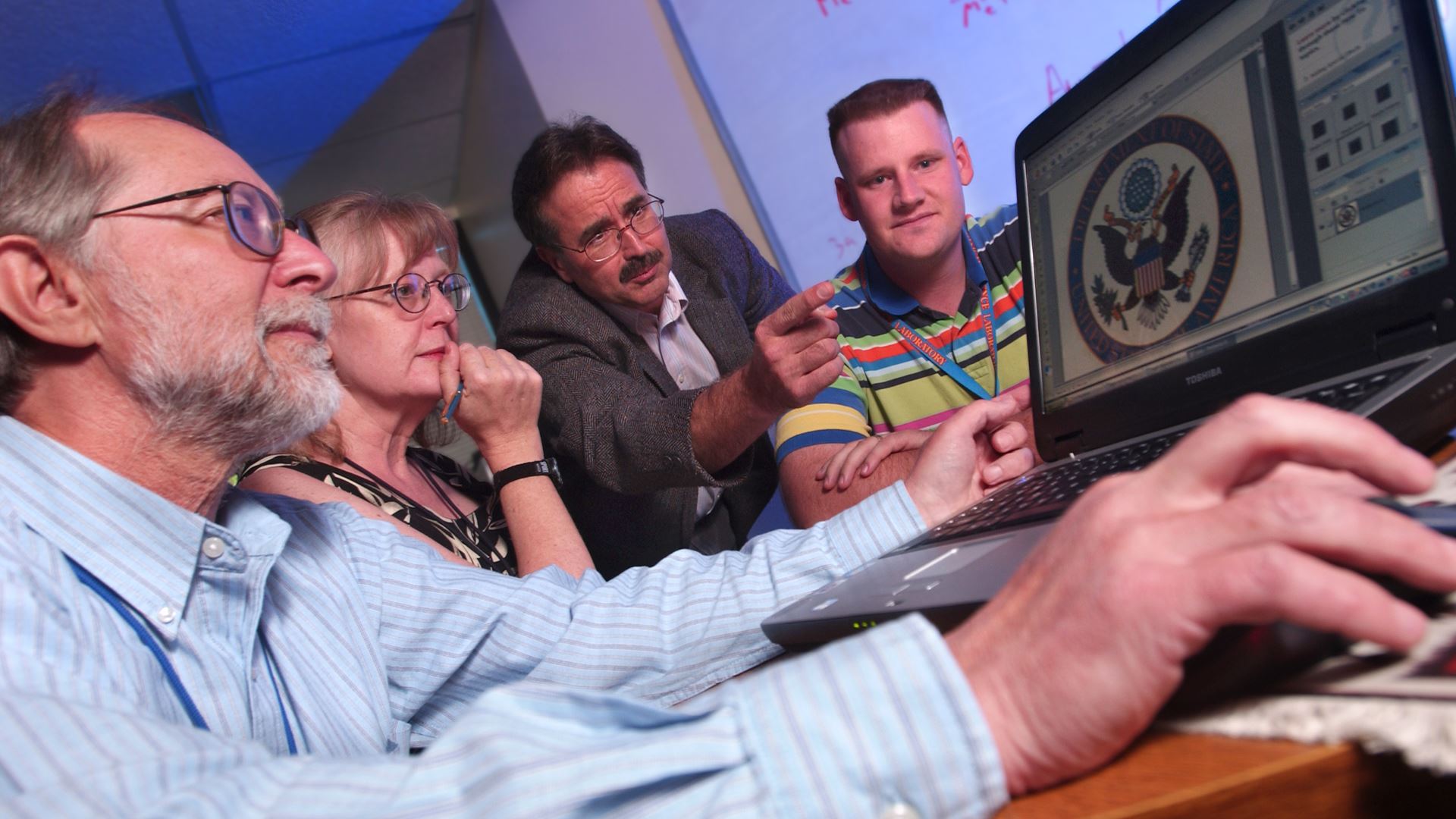
Beyond its technical contributions, PSL has maintained a longstanding commitment to preparing the next generation of scientists, engineers and national security professionals. Since its founding, the laboratory has provided students with opportunities to participate in applied research, gain hands-on technical experience and work alongside professionals on projects addressing real-world challenges.
That commitment to student development, combined with its partnerships across the defense and aerospace sectors, continues to strengthen New Mexico’s workforce and economic opportunities.
As PSL marks its 80th anniversary, the laboratory recognizes the generations of NMSU faculty, students, researchers, engineers, military personnel and government partners who have contributed to its success.
From the early days of rocket testing at White Sands to today’s advanced aerospace and national security research, PSL’s history reflects a shared commitment to innovation, collaboration and service.
“From the earliest rocket testing efforts at White Sands to today’s national security challenges, each generation has built on the work of those who came before them,” Sullivan said. “We’re proud of that legacy and excited to carry that spirit of innovation, collaboration and service into the future.”
Eighty years later, that mission continues.