

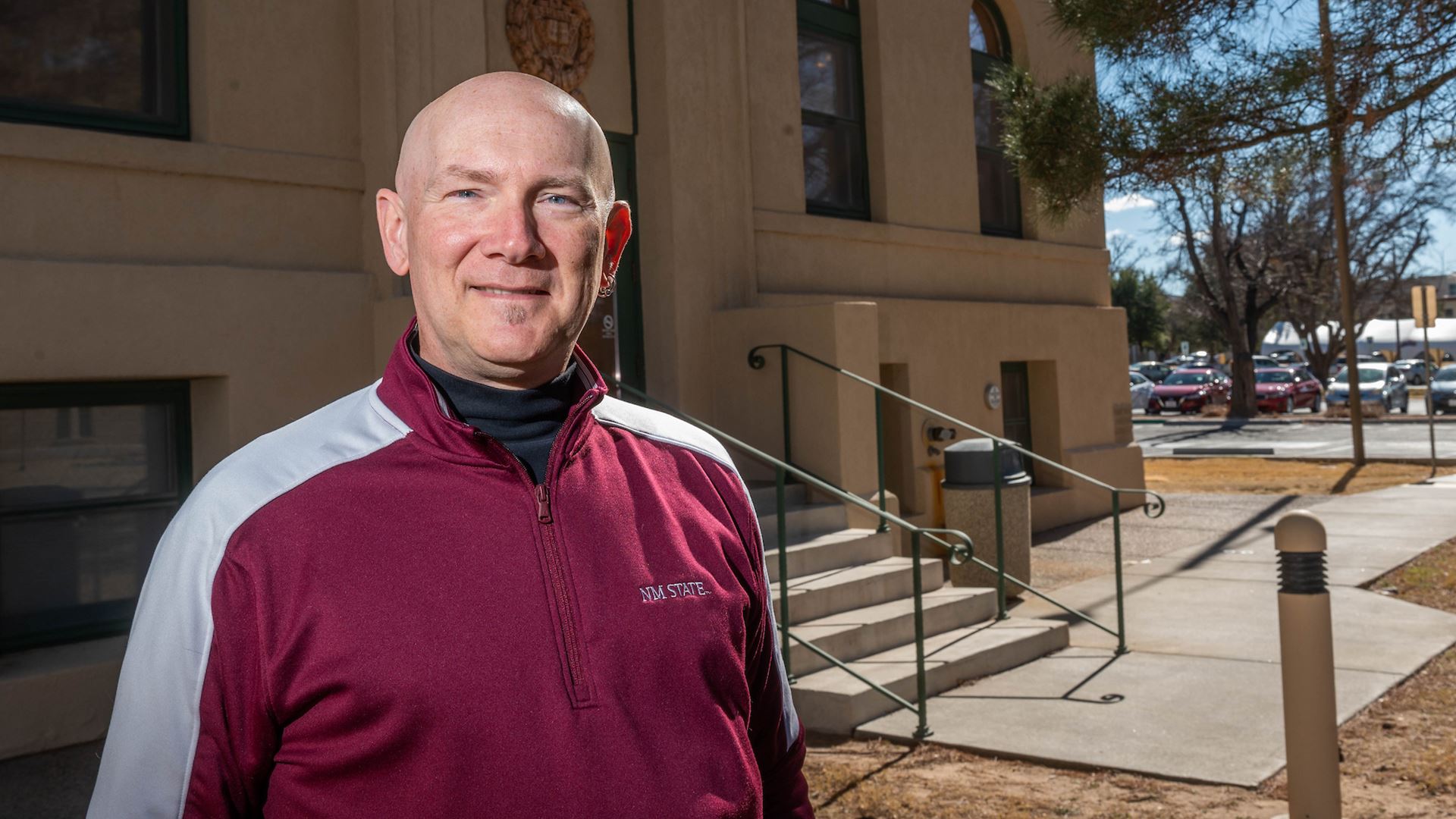
By Marko Mohlenhoff
TRIO McNair Scholars Program, New Mexico State University
We hear a lot these days the question, “Is a college education still worth it?”
I was fortunate growing up. Though our family didn’t have a lot of money, my brother and I never wanted for anything – except maybe the cable television or some of the toys other kids in the neighborhood had that our parents said we didn’t need. My mother was able to stay home to raise us, and my father was the third generation of a family of German-American agricultural workers who immigrated to New York and finally settled on Staten Island to farm. Thanks to my parents’ hard work, sacrifice, and investment in my future, after I got my high school diploma from the New York City public school system, I was able to attend a university and get my bachelor’s degree. While working on my degree, I never heard the term “first-generation” or thought about what it meant to be from a low-income family, but that’s what I was – a first-generation, low-income college student. I also have a master’s degree but didn’t get it until later in life.
Now, I often think of how life might be different if I’d never gone to college, or if I’d had someone in college to encourage me and show me the way and the benefits of getting a graduate degree. This is because, 30 years later, I work at New Mexico State University with the Honors College’s TRIO McNair Scholars Program. Together with the remarkable, caring staff of the other TRIO programs at NMSU (Talent Search, Upward Bound, TRIO SSS Classic, and TRIO SSS STEM-H – all programs federally funded by the U.S. Department of Education), our purpose is to support first-generation, low-income students in pursuing educational goals they otherwise might not be able to achieve. In McNair, I have the real privilege of working with some of the most talented students to support them in their pursuit of graduate school and a doctoral degree. We prepare these students with as much information and experiences as possible to competitively apply to graduate programs.
Sometimes, when I talk about work, I like to say that if you want hope for the future, come meet the students in the McNair program. They’re not only proof-positive that “TRIO Works,” but they’re also evidence that yes, the TRIO programs and a college education are worth it, because they enable these McNair Scholars to learn what they need to go out into the world and change it for the better.
If you’re more the “story type” that likes to learn through anecdotes, I can share with you the story of Karyme, one of our first graduates from the McNair program who is finishing her first year in the Master’s in Counseling program at the University North Carolina, Charlotte, so that she can one day serve as a professional working to address the mental health crisis in her community. Or the story of Daren, a McNair scholar who is graduating this year and will be starting her Master’s in Special Education with an added endorsement in Visual Disabilities in Vanderbilt University’s Peabody College towards her goal of educating and supporting students with visual impairments. And then there’s Kimberly – who was accepted to University of Georgia’s Ph.D. program in Bioinformatics, and who is working towards a career in researching foodborne bacterial pathology.
For those of you more interested numbers, consider this: nationally, every dollar spent by the U.S. Department of Education on TRIO programs yields a return on investment to the U.S. Government of 13 dollars, as shown by the calculated increased tax revenue generated from the higher salaries earned by TRIO’s college graduates by virtue of their college degrees. This is backed by the U.S. Bureau of Labor Statistics’ most recent study from August 2025, which shows that bachelor’s degree holders earn an average of 65% more weekly than someone who holds only a high school diploma, master’s degree holders earn 97% more, and doctoral degree holders on average earn well over twice that of someone who holds only a high school diploma.
So, is it worth supporting our institutions of higher education like New Mexico State University, which, for so many of our first-generation New Mexico students, represents a real path forward to a better life for them, their families, and their communities? And is it worth it to support our federal TRIO programs, which are supporting more than 850,000 students in preparing for and succeeding in earning a college degree? And is getting a college degree still worth it? I think the answer is still yes.
Marko Mohlenhoff is director of the TRIO McNair Scholars Program in the Honors College at New Mexico State University. He may be reached at markom@nmsu.edu.